

license plates have played a lasting role in Kentucky’s transportation history, reflecting changes in vehicle registration, state administration, and plate production. Early Kentucky plates were simpler than modern issues, often featuring basic lettering, limited colors, and identification numbers. Over the decades, plate styles changed as registration systems became more organized and motorists received updated designs. Old Kentucky plates can show how the state presented its identity through colors, symbols, slogans, and materials. Their historical value makes them interesting to collectors, longtime residents, and anyone researching Kentucky vehicle records.
license plates from earlier Kentucky periods offer a useful look at how vehicle identification developed across the state. Early issues often used straightforward number sequences, simple layouts, and durable materials suited to road conditions of the time. Later plates introduced new colors, graphics, county references, and other identifying features that marked different periods of Kentucky history. Collectors may compare old plates by year, design, condition, and registration details. Historic Kentucky plates can provide valuable context for changes in transportation, state branding, and vehicle registration practices.
County Names and Major Changes in Kentucky Plate Design
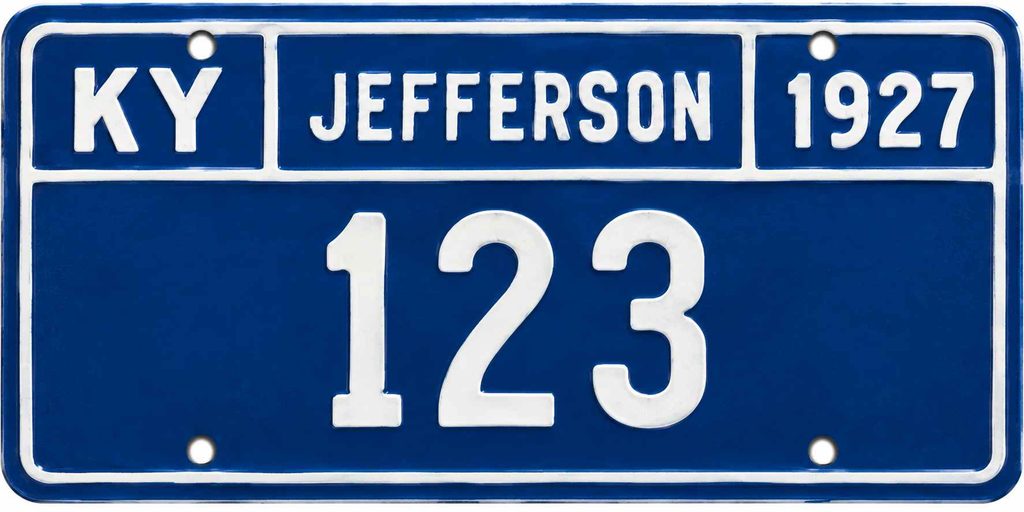
Kentucky license plate history took a major step forward in 1927 when county identification became part of the passenger plate design. This change made each registration easier to associate with a particular Kentucky county and created a clear county designation within the state’s serial format. Historical plates from this period show how registration information gradually became more detailed, with the county name placed alongside the state abbreviation, year, and serial number. The 1927 design is especially significant because Kentucky became the first U.S. state to issue passenger plates displaying the name of the county of issuance.
County Identification Begins
In 1927, Kentucky introduced county names on passenger license plates, creating an important milestone in Kentucky license plate history. The plates used a blue background with embossed white numbers and were divided into bordered sections. The upper portion displayed “KY,” the county name, and the year, while the registration serial appeared in the lower sections. Serial numbers began at 1 within each county, linking the number directly to the local registration system.
This county-based format continued into 1928, with changes to the placement of the year and serial information. The county name became a recurring feature of Kentucky plate evolution, giving historical plates a useful visual clue for identifying where a vehicle was registered. County treasurers played a local administrative role in vehicle registration, but the plate itself was issued as part of Kentucky’s state registration system rather than by this website.
1929–1932 Front and Rear Plate Differences
The 1929–1932 period introduced a distinctive change in Kentucky plate design: front and rear plates did not always carry the same information. In 1929, both plates identified Kentucky and the year, but the front plate included the county name and the serial number, with “FRONT” separating the serial portions. The rear plate used the serial number and displayed the phrase “FOR PROGRESS” at the bottom instead of the county name. The same basic front-and-rear distinction continued in 1930.
The arrangement changed again in 1931 and 1932. Front plates continued to identify Kentucky and the year, while rear plates carried the county information with the state abbreviation and year. These changes show how Kentucky registration plates were adjusted within only a few years, making serial format, county designation, and state identification useful clues for dating historical plates.
Kentucky License Plate History at a Glance
Kentucky License Plate History reflects more than a century of changes in plate materials, colors, serial formats, artwork, and registration policies. This compact timeline highlights the major milestones that shaped Kentucky plates from the first statewide issues to the modern system.
| Year | Major Milestone |
|---|---|
| 1910 | Kentucky’s statewide vehicle plate system begins, establishing early registration plates. |
| 1914 | Kentucky issues its first dated embossed plate, marking an important change in plate production. |
| 1927 | County identification appears on passenger plates, adding the county name to the registration format. |
| 1929–1932 | Distinctive front and rear plate layouts are used, with county information and other details appearing in different positions. |
| 1950s | Kentucky moves into standardized plate dimensions; the 1955 issue dated 1956 follows the North American 6 × 12-inch format. |
| 1975 | A major modern-era design phase begins, continuing the shift toward contemporary plate styling. |
| 1988 | The Bluegrass State design era begins, featuring Kentucky imagery and reflective foil technology. |
| 2011 | Kentucky introduces the “In God We Trust” alternative plate design. |
| 2020 | Kentucky introduces a modern digitally printed plate design, moving further from traditional embossed production. |
| 2021 | A newer serial format becomes part of Kentucky’s modern plate system. |
| 2024 | Kentucky changes its plate-retention policy, allowing eligible sellers to keep an unexpired plate for use on another vehicle they own. |
Early Kentucky License Plates 1910–1926
The history of old Kentucky license plates began in the early 20th century, when the state started using plates to identify registered vehicles. The earliest plates were simple compared with later designs, but they established the basic system of serial numbers and state identification that became common on Kentucky registrations. Early plates were produced from materials such as porcelain-coated metal and later metal sheets, with colors and numbering styles changing over the years. These old KY license plates provide useful evidence of how vehicle registration developed in Kentucky before modern standardized designs appeared. For people moving to Kentucky, the state’s current registration for new residents is a separate part of vehicle ownership, requiring eligible vehicles to be registered according to current Kentucky requirements rather than historical plate practices.
The First Kentucky Plates, 1910–1914
Kentucky’s first vehicle plates appeared in 1910, marking an early stage in Kentucky license plate history. The earliest examples were made from black porcelain and featured light-colored serial numbers. Rather than using the detailed graphics found on later plates, these early registrations relied on simple lettering and numbering to identify vehicles. The serial numbers were generally the main identifying feature, while KY was used as the state designation.
The 1910–1913 plates were issued as early registration markers and had a distinctly basic appearance. A major change came in 1914, when Kentucky introduced its first dated embossed plate. The embossed characters were raised from the metal surface, making the serial information easier to identify and giving the plate a more durable format. This transition represents an important step in the development of old Kentucky license plates.
Kentucky Plate Colors and Materials, 1915–1926
From 1915 through 1926, Kentucky license plates went through several changes in plate color, materials, lettering, and numbering styles. The state used different color combinations from year to year, helping identify the registration period of a particular plate. These combinations could include contrasting backgrounds and raised characters, creating the recognizable appearance associated with many vintage plate examples.
During this period, metal became increasingly important as a practical plate material. The use of embossed lettering and numbers continued, giving plates a consistent method for displaying the serial number and registration information. Some early examples retained distinctive color schemes that make them useful to collectors studying historical plates.
The progression from porcelain-coated plates to more standardized metal construction reflects broader changes in vehicle registration. Each dated plate represented a specific registration year, while its colors, material, and serial format could help distinguish one issue from another. By 1926, Kentucky’s plate system had developed considerably from the simple black porcelain plates used in 1910. These old plates form an important part of Kentucky’s early automotive registration history and show how plate materials and design gradually became more standardized before the county-identification changes of the late 1920s.
Plate History From the 1930s to 1974
Kentucky License Plate History from the 1930s through 1974 shows a gradual shift from highly distinctive annual issues to more standardized vintage Kentucky plates. During these decades, changes in plate color, embossed lettering, serial number placement, and dimensions reflected developments in vehicle registration. Old Kentucky license plates from this period can often be identified by their year, color combination, wording, and overall plate design.
1930s Kentucky Plates
The 1930s brought several changes to Kentucky’s plate design. Early issues continued the use of embossed metal with contrasting colors and prominent serial numbers. Front and rear plates could have different layouts, with county information appearing in different positions during the early part of the decade. By the middle and later 1930s, Kentucky continued refining the arrangement of the state name, year, county designation, and serial number. These old KY license plates are particularly useful for historical identification because their colors, wording, and number formats changed across individual issues. The decade helped establish design patterns that influenced later historical license plate KY issues.
1940s and Wartime-Era Plates
During the 1940s, Kentucky continued issuing embossed metal plates with changing color combinations and registration details. Wartime shortages affected plate production across the United States, leading some states to experiment with alternative materials and production methods. Kentucky’s plates retained recognizable state identification and serial-number formats, while annual color changes remained useful for identifying the issue date. These old Kentucky license plates provide a record of registration practices during the wartime period and the years immediately after it.
1950s and Standardized Plate Dimensions
The 1950s marked a significant stage in Kentucky’s plate design. Embossed metal remained the standard, with annual colors and serial-number arrangements helping distinguish different issues. A major milestone came with the 1955 issue dated 1956, which was the first Kentucky plate to comply with the standardized 6 × 12-inch dimensions adopted across North America. This change brought Kentucky plates into the common physical format used by many other jurisdictions. The decade therefore represents a transition from earlier vintage Kentucky plates to a more uniform plate size while retaining embossed characters and recognizable state identification.
1960s–1974
From the 1960s through 1974, Kentucky continued refining its plate design while maintaining embossed serial numbers and yearly identification. Plate colors and layouts changed across different issues, giving collectors useful clues for identifying an individual plate. The designs became increasingly consistent in size and presentation, reflecting the standardized dimensions established during the 1950s. By 1974, old KY license plates had moved considerably away from the early porcelain and highly varied designs seen in the first decades of Kentucky license plate history.
Plate Design Evolution From 1975 to 2000
Kentucky plate evolution from 1975 to 2000 brought major changes in appearance, materials, imagery, and production methods. During these years, Kentucky license plate history moved from traditional embossed formats toward more visually detailed and reflective designs. The 1975 plate, 1977 plate, 1983 plate, and 1988 plate each represent different stages in this development. For collectors of an old Kentucky license plate or vintage plate, features such as background color, serial format, state wording, and artwork can help distinguish one issue from another.
1975–1977 Kentucky Plates
The 1975–1977 period continued Kentucky’s use of embossed metal plates with clearly visible serial numbers. The plate design retained a relatively simple appearance, with state identification and registration information forming the main visual elements. Color combinations changed from earlier issues, giving these plates their own place in Kentucky’s plate evolution. The 1975 plate is useful for tracing the transition from earlier embossed designs to the more graphic styles that appeared later in the decade. By 1977, Kentucky was preparing for another notable design change.
1977–1983 Design
The 1977 plate introduced a different visual treatment while retaining the embossed construction familiar on earlier Kentucky registrations. State identification, serial numbers, and contrasting colors remained central to the layout. This period is significant for collectors studying old Kentucky license plates, since the design sits between the simpler 1970s issues and the more distinctive graphics that followed. The format continued through the early 1980s before Kentucky introduced another updated plate design.
1983–1988 Design
The 1983 plate represented another stage in Kentucky’s changing plate appearance. The state continued using embossed registration characters, but the overall presentation became more contemporary. Color and layout changes helped separate these issues from earlier vintage plates. The 1983–1988 period also led into a major design shift that incorporated recognizable Kentucky imagery and new reflective production technology.
1988–1997 “Bluegrass State” Design
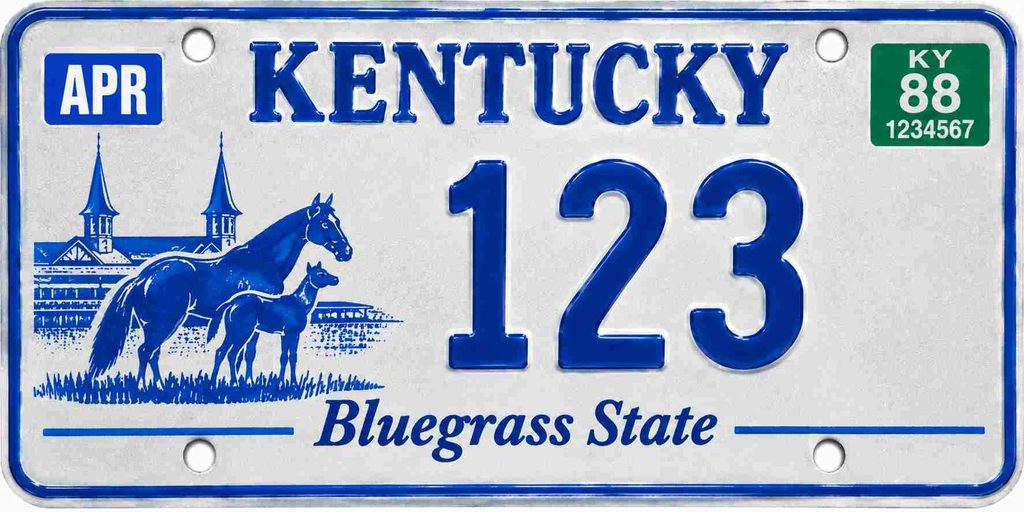
The 1988 issue marked one of the most recognizable changes in modern Kentucky license plate history. The design featured Churchill Downs imagery, including the well-known mare and foal, and used the phrase “Bluegrass State.” This artwork gave Kentucky plates a stronger connection to the state’s horse-racing heritage and landscape.
A major production development arrived in the same period when reflective foil was introduced in 1988. The reflective surface improved the visibility of registration information, particularly when illuminated at night. This represented an important technological step beyond the traditional embossed plate format. The combination of reflective technology, equine imagery, and the “Bluegrass State” wording made these plates especially distinctive among late-20th-century Kentucky issues.
Late-1990s Design Transition
By the late 1990s, Kentucky began moving into another stage of plate evolution. Newer layouts placed greater emphasis on reflective backgrounds, updated graphics, and clearer registration information. The transition marked a gradual move away from the appearance associated with older embossed plates. For collectors, late-1990s issues provide a useful link between Kentucky’s classic vintage plate designs and the styles used after 2000.
Kentucky License Plates From 2000 to 2019
The 2000–2019 period represents an important stage in Kentucky license plate history, with new graphics, reflective surfaces, and alternative designs becoming more common. Old Kentucky license plates from these years can be identified through their artwork, wording, serial format, and registration details. Kentucky also continued offering designs connected with state identity and tourism, creating a wider range of legacy plates and historical plates for collectors to compare.
2000s Plate Designs
During the early 2000s, Kentucky continued using reflective plates with colorful graphics and embossed registration characters. The designs promoted Kentucky’s identity through images and references connected with Kentucky Tourism, the state’s natural attractions, and its cultural heritage. The standard serial format remained an important part of registration identification, while reflective surfaces improved visibility of the plate at night. These 2000s Kentucky plates differed from the simpler embossed plates of earlier decades through their stronger use of graphics and color. For collectors, details such as the background artwork, state name, serial number arrangement, and issue year can help distinguish individual plates from this period.
2008–2011 Changes
The 2008 plate continued Kentucky’s use of reflective materials and recognizable state-themed artwork while maintaining a clear registration format. During this period, plate production increasingly focused on visibility and graphic presentation rather than the plain appearance associated with older plates. The 2011 plate brought another significant change by introducing an alternative design carrying the phrase “In God We Trust.” This gave motorists a choice beyond the standard issue and became an important point in the state’s modern plate development.
“In God We Trust” and Alternative Plates
In 2011, Kentucky introduced an “In God We Trust” alternative license plate design, creating an important bridge between older registration styles and modern specialty options. The design provided an alternative to the standard plate while retaining the required registration information and serial format. Its introduction expanded Kentucky’s range of available plate designs and added a recognizable option to the state’s collection of legacy plates.
The period also reflects the growing role of themes and visual identity in plate production. Earlier historical plates often relied heavily on embossed numbers, yearly colors, and basic state identification. By contrast, modern Kentucky issues could combine reflective technology, graphics, tourism themes, and specific wording. The 2000–2019 period therefore marks a clear stage in the transition from traditional old Kentucky license plates to more varied contemporary designs.
License Plate 2023 and 2024
The Kentucky license plate 2023 and Kentucky license plate 2024 are best viewed as part of the state’s continuing modern registration system rather than as two completely separate base designs. Kentucky offers standard passenger plates, including Bluegrass State and In God We Trust designs, along with many specialty options. The key distinction for 2024 was administrative: Kentucky changed how plates and registrations are handled when vehicle ownership changes.
Kentucky License Plate 2023
The Kentucky license plate 2023 continued the state’s modern plate system, using established standard designs and serial-number formats rather than introducing a completely new base passenger plate. Kentucky’s standard passenger options included the Bluegrass State and In God We Trust plates, with reflective plate surfaces and clearly displayed registration characters.
For Kentucky license plate history, 2023 is useful as a reference point for the modern system. The plate’s appearance should be separated from administrative rules: the design, serial format, and vehicle registration information identify the plate, while ownership-transfer rules determine how that plate can be retained or reassigned.
Kentucky License Plate 2024
The major 2024 change was related to plate transfer, rather than a complete redesign of the standard plate. Beginning in January 2024, Kentucky moved to a system under the Kentucky Automated Vehicle Information System (KAVIS) in which a seller generally keeps an unexpired license plate and registration when transferring vehicle ownership. The seller can apply that plate and registration to another vehicle of the same class they own, subject to the applicable requirements and fee.
This change followed Kentucky’s transition to a newer vehicle information system and replaced the previous practice in which an unexpired plate generally stayed with the vehicle during an ownership transfer. The Kentucky Transportation Cabinet states that the new process was intended to make ownership transfers more convenient and reduce costs in some situations.
Antique Plates and Vintage Plate Collecting
A Kentucky antique license plate can be an interesting piece of automotive history, particularly for collectors interested in old Kentucky license plates and the state’s changing registration designs. Collectors may seek plates from specific years, counties, design periods, or material types. Features such as an unusual color combination, clear embossed lettering, county identification, or a distinctive historical design can increase collector interest. Rarity and physical condition may influence desirability, but the presence of these features does not guarantee a specific monetary value.
Collecting Old Kentucky Plates
Collecting old KY license plates can involve finding original plates through private collections, antique markets, estate sales, or other legitimate sources. Some collectors focus on completing a sequence of yearly issues, while others concentrate on particular periods or designs. A collectible plate can be displayed on a wall, in a framed collection, or as part of an automotive-themed display.
Restoration and Display
Vintage Kentucky plates can be used in restoration projects involving historically styled vehicles. Before restoring an old plate, collectors may want to preserve its original condition, since excessive cleaning, repainting, or refinishing can remove characteristics that help establish its authenticity. For display purposes, protective framing or controlled indoor storage can help reduce exposure to moisture, sunlight, and other conditions that may damage an old vintage plate.
Authentic Plates vs. Reproductions
An authentic plate is an original historical registration plate, while a reproduction is made later to resemble an older design. Reproductions can work well for decorative displays or restoration projects where an original plate is unavailable, but they should be clearly identified as reproductions. Original embossing, manufacturing details, aging, serial-number format, and documented history can help distinguish an authentic plate from a newer copy.
For collectors, vintage Kentucky plates are often desirable because they preserve visible details from earlier registration systems. Age alone does not establish rarity or value; condition, authenticity, availability, and collector interest can all affect how a particular Kentucky antique license plate is regarded.
Historic License Plates vs. Old or Vintage Plates
The terms Kentucky historic license plate, antique plate, vintage plate, and old plate are often used interchangeably, but they can describe different things. A Kentucky historic license plate may refer to a legally recognized registration category for a qualifying historic vehicle, while old Kentucky license plates can simply refer to physical plates from an earlier period. This distinction matters for owners, collectors, and restoration enthusiasts who want to identify whether a plate is part of Kentucky’s historic registration system or simply an older collectible plate.
| Type | What It Means | Main Purpose | Age Requirement | Legal Registration Status | Example |
|---|---|---|---|---|---|
| Kentucky Historic License Plate | A plate connected with Kentucky’s legally recognized historic vehicle registration category | Used with a qualifying historic motor vehicle | Vehicle/plate must meet Kentucky’s applicable requirements; authentic plates used under the relevant provision must be at least 25 years old | Yes, when statutory requirements are satisfied | An eligible historic vehicle displaying an approved authentic Kentucky plate |
| Old Kentucky License Plate | A physical license plate from an earlier Kentucky registration period | Collection, research, restoration, or display | No specific age requirement simply to be considered old | Not automatically a historic registration plate | A 1960s Kentucky plate kept by a collector |
| Vintage Kentucky Plate | An older plate valued for its historical design, age, or appearance | Collecting and display | No fixed age requirement in ordinary usage | Not automatically a legal registration category | A 1970s embossed Kentucky plate |
| Kentucky Antique License Plate | Commonly used to describe an older or collectible plate; legal meaning can depend on the context | Collecting, restoration, or vehicle-related use | Depends on the applicable Kentucky registration rules | Not automatically historic registration | An authentic early Kentucky plate preserved for a collection |
| Authentic Plate | An original plate produced and issued during its historical period | Historical preservation, collection, or qualifying vehicle use | Depends on the plate and applicable law | May qualify for specific legal use if requirements are met | An original 1930s Kentucky plate |
| Reproduction Plate | A newer plate made to replicate an older Kentucky design | Restoration or replacement where permitted | Depends on applicable requirements | May be permitted for qualifying historic vehicle use under Kentucky law | A reproduction of an older Kentucky plate design |
Frequently Asked Questions
Kentucky license plate history, including the state’s earliest plates, county identification, historic designs, and important changes in plate formats. These answers provide quick information about old Kentucky license plates and their development over time.
When did Kentucky first issue license plates?
Kentucky began its statewide vehicle registration plate system in 1910. The earliest old Kentucky license plates were simple in appearance and primarily used serial numbers to identify registered vehicles. These early issues marked the beginning of Kentucky License Plate History and established the foundation for the dated and embossed plate designs that followed in later years.
What did the first Kentucky license plates look like?
The earliest old KY license plates used a simple design with limited decoration. Kentucky’s first plates were made from black porcelain and displayed contrasting serial numbers for vehicle identification. The state designation “KY” was used on early issues. In 1914, Kentucky introduced its first dated embossed plate, creating a more recognizable format for historical license plate KY examples.
What are the oldest Kentucky license plates?
The oldest Kentucky plates date to 1910, when the state began issuing statewide vehicle registration plates. These early old Kentucky license plates were made from black porcelain and used simple serial-number designs. Plates from 1910–1913 are among the earliest examples, while the 1914 issue is particularly significant for its dated embossed format. Their age and historical design make them notable vintage plate examples.
When did Kentucky start putting county names on license plates?
Kentucky began placing a county name on passenger license plates in 1927. This was a major milestone in Kentucky license plate history because the county designation connected the registration plate with the Kentucky county where the vehicle was registered. The county-based format continued through subsequent design changes, making county names useful for identifying and dating historical Kentucky plates.
What is the Kentucky historic license plate?
A Kentucky historic license plate relates to the state’s legal provisions for qualifying historic motor vehicles. Kentucky law allows an eligible historic vehicle to display an authentic Kentucky plate that is at least 25 years old, or a reproduction plate when the statutory requirements are met. Historic plates Kentucky owners use must comply with applicable registration rules, and required documentation must be maintained in the vehicle.